
Description
Cellulose Derivative · Anionic Polymer
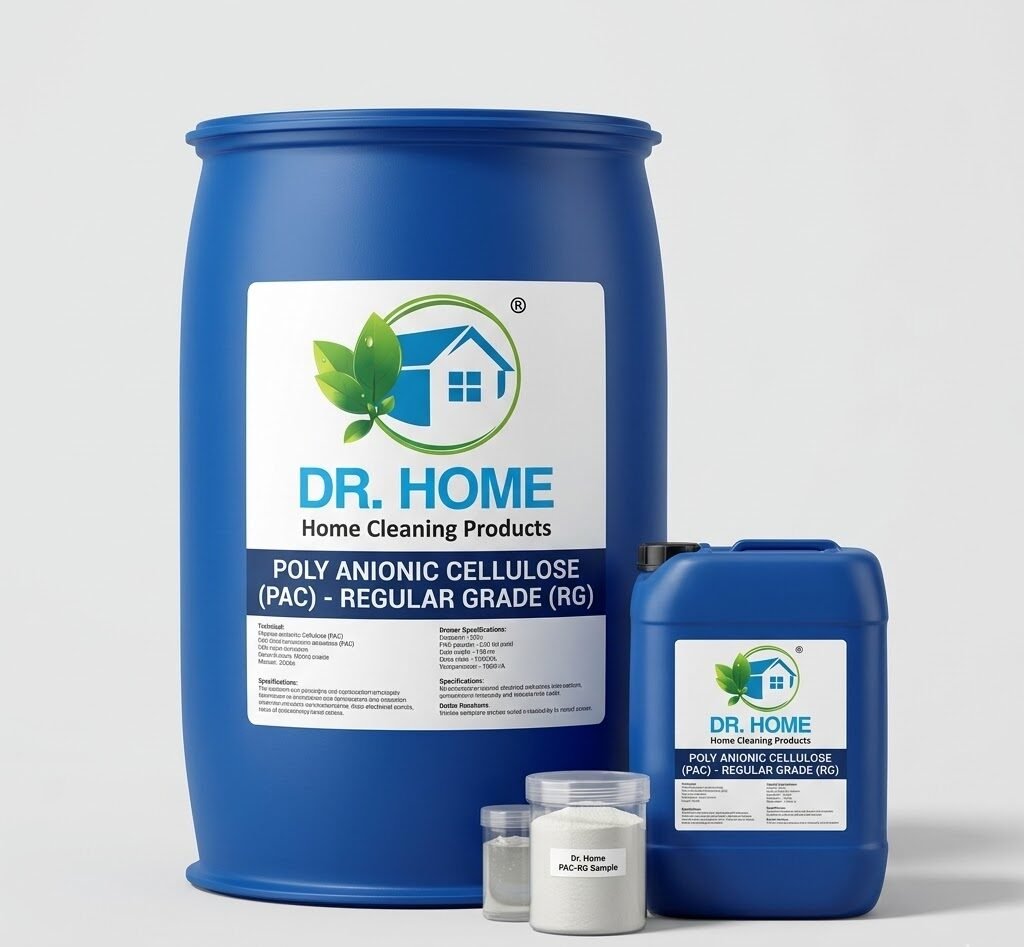
Poly Anionic Cellulose – PAC Regular Grade (RG)
A high-performance, water-soluble cellulose derivative widely used in oil & gas drilling operations for excellent fluid loss control and viscosity modification in water-based drilling muds.
Product Overview
Poly Anionic Cellulose (PAC) Regular Grade is an anionic polymer derived from natural cellulose through carboxymethylation. It offers excellent fluid loss control and viscosity modification in water-based drilling muds. PAC RG is engineered to perform effectively across a wide range of temperatures, salinities, and pH levels, making it one of the most trusted additives in the drilling industry.
Technical Specifications
| Parameter | Value |
|---|---|
| Appearance | White to Off-White Powder |
| Degree of Substitution (DS) | ≥ 0.85 |
| ≥ 30 mPa·s | |
| Moisture Content | ≤ 10% |
| pH (1% solution) | 6.5 – 8.5 |
| Purity | ≥ 95% |
| Particle Size | 95% pass through 100 mesh |
| Solubility | Soluble in hot and cold water |
Applications
Oil & Gas Drilling
Fluid loss control in water-based drilling muds
High-Density Muds
Effective performance in high-salinity and brine-based systems
Horizontal & Directional Drilling
Maintains wellbore stability and mud properties
Workover & Completion Fluids
Controls filtration loss during well intervention operations
Polymer Muds
Acts as a primary filtration control agent
Safety Information
Handling Precautions
- Avoid inhalation of dust
- Use dust mask, goggles & gloves
- Keep away from open flames
Storage Conditions
- Cool, dry & ventilated area
- Away from moisture & sunlight
- Below 40°C
- Shelf Life: 2 years
First Aid
- Eyes: Flush 15 minutes with water
- Skin: Wash with soap & water
- Inhalation: Move to fresh air
- Ingestion: Seek medical help
✔ Non-Toxic
✔ Biodegradable
✔ Not GHS Hazardous
✔ Biodegradable
✔ Not GHS Hazardous
Frequently Asked Questions
Q1. What is the difference between PAC Regular Grade and PAC Low Viscosity Grade?
PAC Regular Grade (RG) provides higher viscosity and is used for standard fluid loss control in water-based drilling muds. PAC Low Viscosity Grade (LV) offers lower viscosity and is preferred in systems where minimal viscosity build-up is required, such as high-density brines and completion fluids.
Q2. Is PAC RG suitable for use in saltwater or brine-based drilling fluids?
Yes. PAC Regular Grade performs effectively in freshwater, seawater, and saturated salt (NaCl) systems, making it highly versatile for offshore and onshore drilling operations.
Q3. What is the recommended dosage of PAC RG in drilling mud?
Typical dosage ranges from 0.5 to 3.0 lb/bbl (1.5 to 8.5 kg/m³) depending on the formation, mud system, and desired fluid loss control level. Exact dosage should be determined based on mud testing.
Q4. Can PAC RG be used at high temperatures?
PAC RG is effective at temperatures up to 150°C (300°F). For ultra-high temperature applications, additional thermal stabilizers may be recommended.
Q5. How should PAC RG be added to the drilling fluid?
PAC RG should be added slowly and steadily to the mud system under agitation to ensure complete dissolution and avoid lumping. Pre-mixing with a small quantity of oil or dry blending with other additives is also effective.
Q6. Is PAC RG environmentally safe?
Yes. PAC RG is derived from natural cellulose, is biodegradable, and is considered environmentally safe under normal handling and disposal conditions.
Q7. What is the shelf life of PAC RG?
When stored in original sealed packaging in a cool, dry, and well-ventilated area away from direct sunlight and moisture, PAC RG has a shelf life of 2 years from the date of manufacture.
Reviews
There are no reviews yet.